
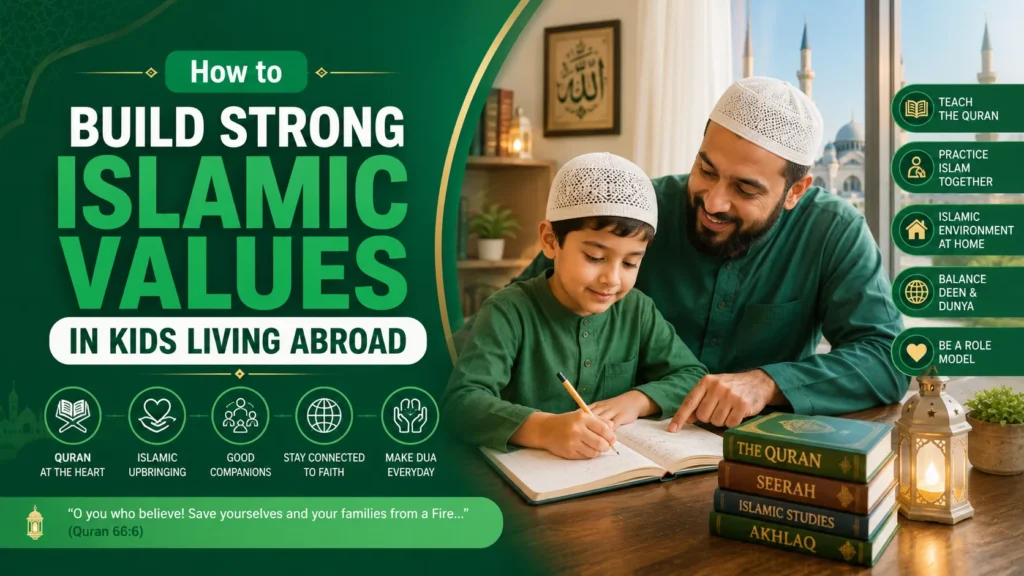
We speak with a lot of Bangladeshi parents living in the USA, UK, Middle East, and Europe, and a concern comes up again and again, usually phrased something close to this: “My child is growing up around a completely different culture every day, at school, with friends, on their phone. How do I make sure Islam actually sticks, not just as a set of rules, but as something they genuinely value?”
It is a real concern, and there is no single fix for it. But after years of working with diaspora families on exactly this challenge, we can say clearly that it is absolutely possible, and it does not require isolating your child from the world around them. It requires consistency, honest conversation, and making sure Islamic learning feels like something meaningful, not just an obligation squeezed in after a long day.
Why This Feels Harder Abroad Than It Did at Home
Back home in Bangladesh, Islamic values are reinforced constantly and without much effort, the call to prayer, family gatherings, a nearby mosque, relatives who model the same practices. Abroad, that reinforcement often has to be built deliberately, since it does not happen automatically through the surrounding environment.
This is not a reason for guilt. It is simply a different starting point, and once parents recognize that, they can build a home environment that fills that gap intentionally rather than assuming it will happen on its own.
Start With Consistency, Not Intensity
A common mistake is trying to compensate for a less Islamic surrounding environment by making religious learning feel heavy, long lectures, strict rules, frequent correction. This often backfires, especially with children who are also navigating a different culture at school every day and may already feel caught between two worlds.
What tends to work better is steady, manageable consistency: a short daily habit that happens reliably, rather than occasional intense sessions. A ten-minute daily conversation about a value, a story, or a short Quran passage will build more lasting understanding than a long, irregular lesson once every few weeks.
Build a Structured Foundation, Not Just Informal Conversation
Values conversations at home matter, but they work best alongside structured learning that covers the fundamentals properly, rather than relying only on informal, as-it-comes discussion. This is where a dedicated Islamic Studies course makes a real difference, since it introduces Aqeedah, basic Fiqh, Hadith, and Islamic history in an organized way suited to your child’s age, rather than covering topics only when they happen to come up.
Our Islamic Studies course is built specifically with this gap in mind, giving children abroad the same structured foundation they might have received growing up in a madrasa setting back home, adapted to fit into a family’s schedule wherever they are living.
Anchor Learning in the Quran, Not Just Rules
Children are far more likely to internalize Islamic values when they understand the reasoning and meaning behind them, rather than experiencing them only as a list of dos and don’ts. This is one reason Quran learning and understanding its meaning matter so much, especially for children growing up in an environment where they will regularly be asked to explain or justify their beliefs and practices to friends or classmates.
Starting with solid Quran reading through a course like Noorani Qaida or Quran Reading with Tajweed gives your child the ability to engage directly with the text, not just hear about it secondhand. As they grow older, connecting them with basic Tafseer helps values feel understood rather than simply imposed.
Make Arabic Feel Like a Connection, Not a Chore
For many children abroad, Arabic can start to feel like a foreign, disconnected subject, especially if English or the language of their country of residence dominates daily life. Framing Arabic learning as a way to understand their own faith directly, rather than a separate academic task, tends to build more genuine motivation. Our Arabic Language course is designed with this in mind, connecting language learning back to the Quran and Islamic texts rather than teaching it in isolation.
Practical Habits That Reinforce Values at Home
- Keep a regular, visible prayer routine, even if it looks different from a mosque setting. Children absorb far more from watching consistent practice than from being told about its importance.
- Talk openly about questions and doubts. Children abroad are often exposed to differing worldviews early, and shutting down questions can push them to seek answers elsewhere, sometimes from less reliable sources. Honest, patient conversation builds trust and keeps you part of that process.
- Connect with local Muslim community where possible, even if it is smaller or less frequent than what extended family might offer back home. Community reinforces that Islamic identity is shared, not isolated to your household alone.
- Celebrate Islamic milestones intentionally, completing a Quran section, Ramadan goals, learning a new surah, the same way school or extracurricular achievements might be celebrated, so faith-related progress feels valued and visible.
- Model the values you want them to hold, since children, especially as they get older, notice inconsistency between what is said and what is practiced far more than parents often expect.
Addressing the Cultural Balance Question Directly
Many parents worry that emphasizing Islamic values abroad means their child will feel disconnected from friends or struggle to fit in. In practice, children generally do not need to choose between their faith and healthy friendships or cultural participation. What helps most is giving them a confident, well-understood sense of their own identity, so they can navigate differences with friends from a place of security rather than confusion or shame. A child who understands why they believe and practice what they do tends to handle these situations with more confidence than one who was only ever told to simply follow the rules.
Why Structured Online Learning Helps Specifically for Families Abroad
One of the practical challenges diaspora families face is simply not having access to a nearby, trustworthy Islamic teacher, especially outside major cities with established Muslim communities. Online learning removes that barrier directly, connecting your child with qualified teachers regardless of where you live, while still allowing you to sit nearby and stay involved in what they are learning.
We have taught students from Bangladeshi families across the Middle East, Europe, the USA, and the UK, and the pattern we see consistently is that structured, regular sessions with a dedicated teacher make a noticeable difference compared to relying only on informal learning at home, particularly as children get older and their questions become more complex.
Frequently Asked Questions
At what age should I start formal Islamic Studies for my child abroad?
Basic concepts can be introduced informally from a young age, but structured Islamic Studies lessons often work well starting around age six or seven, once a child can follow simple explanations and hold short conversations about what they are learning.
How do I handle it when my child asks difficult questions about faith compared to what friends believe?
Answer honestly and calmly, at a level appropriate to their age, rather than avoiding the question. If you are unsure how to answer something yourself, it is completely reasonable to say so and look into it together, or ask a knowledgeable teacher for guidance.
Is it realistic to maintain Islamic learning with a busy family schedule abroad?
Yes, especially with short, consistent daily habits rather than trying to fit in long sessions irregularly. Ten to fifteen minutes a day of steady practice tends to be more sustainable and effective than occasional longer sessions.
Should Islamic Studies come before or alongside Quran learning?
They work well together rather than one strictly before the other. Many families start Quran reading and basic Islamic values conversations at a similar age, then introduce more structured Islamic Studies as the child grows.
How can online classes help if there is no local Islamic school where we live?
Online classes connect your child with a qualified, trained teacher regardless of your location, while you remain present and involved at home. This removes the barrier many diaspora families face when a nearby, trustworthy option simply does not exist.
Raising children with strong, genuine Islamic values abroad is absolutely achievable with consistency and the right support, even without a nearby madrasa or established community. If you would like structured, one-on-one Islamic Studies or Quran classes for your child, you can book a free trial class and see how our teachers work with students living abroad.